
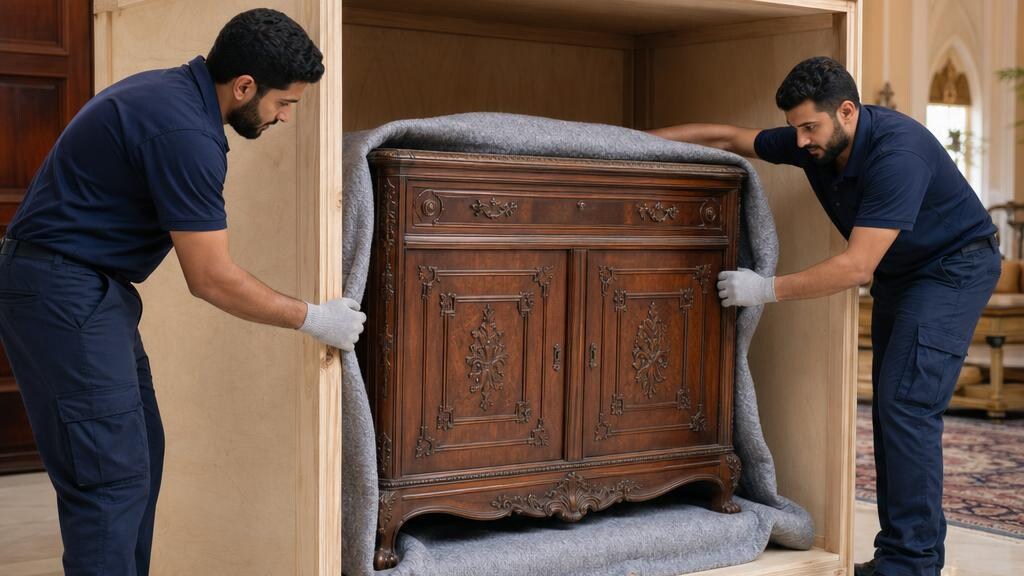
Moving antique furniture safely comes down to three things: custom crating, controlled humidity, and the right paperwork. Solid wood antiques should be kept between 45% and 55% relative humidity to avoid warping or cracking in transit, and appraisal, crating, and — for international moves — customs checks should start 6 to 8 weeks before moving day. Four Winds Saudi Arabia handles all three as part of its antique furniture relocation process, from the first inventory to final unpacking.
There are a lot of things you need to consider when moving. Picking the right professional movers in Jeddah might be one of them, but you also need to think about all the paperwork you will do, as well as taking care of your items when packing and transporting them. The latter is possibly the biggest worry of anyone moving to a new place. What happens if you don’t secure your stuff well? You will end up in your new home – with damaged items! This can be especially horrific when you have valuable and old stuff – the damages here can often be irreplaceable. This is why you need to take special care of these items – from packing them to transporting and unpacking them at the end. In this article, find out some of our best tips on moving antique furniture.
Steps to take when moving antique furniture
As with almost everything in life, careful planning will ensure that your furniture will arrive in one piece in the final destination (unless you disassembled it first). So what are the steps to take?
- Well, first, you should talk to your movers about moving antique furniture.
- Then, take a detailed inventory of your items, together with their value and condition.
- Think about the logistics of the move.
- Finally, pack your items with care.
As you can see, a lot of these steps will involve a lot of planning – and just the last will require you actually do some hard work. This is because by finishing planning, you will have done a huge part of the job. That way, you will know exactly how to behave with your furniture, and what steps you need to take. You will be prepared for the upcoming stuff while doing the previous step – which will in turn only speed up your process.
Moving antique furniture demands special consideration.
This is why it is imperative that you talk to them about moving antique furniture – for multiple reasons. First, they need to know what they will be dealing with. There are certain packing materials that they can use, which will ensure your furniture stays intact during the transport. This might also change your insurance policy to add certain perks and protect your items more – but you need to talk to your company about it. The second reason is so you can plan everything well. The chances are that they already dealt with antiques, and they will know the best way to transport them. Because of this, they will be very valuable when planning your relocation.
Talk to your movers about the move
During the move, your best bet will be to rely on your moving company. Find those that have experience both with moving locally and moving coast to coast – they will probably have the most knowledge. They can tell you exactly how to go about picking the items for the move, packing them, and they can lend you a hand in transporting them as well.
Do a detailed inventory
The second thing you need to do when moving antique furniture is to make a detailed inventory of your items. This will help you decide what you can take with you, and what you can afford to leave behind. Remember, you can cut your moving expenses by lowering the number of items you want to transport since the movers usually charge based on the items’ weight and volume.
Professional movers know how to handle antique furniture.
While you are writing everything down, make sure you also mark the condition they are in. Write down any imperfection that appears on the items. This will help you figure out the state of things after the movers bring them to you. It will also help you set up a clear insurance policy with the moving company. Finally, this way, you are making sure that you will not forget anything once the moving day arrives.
Finally, you should think about appraising your items. Not only will this inform the insurance you can get for them, but it can also tell you a lot more about your items. Maybe you have a hidden gem somewhere in your collection – and it might be worth more selling the item instead of moving it to your new home. Whatever the reason, you should know their cost before you start moving antique furniture.
Look into the house layout
Size of the items is also an important facet to consider when moving antique furniture. These items can often be huge – and hard to carry around. What’s more, sometimes you might find out you are unable to get them through the doors. This is why it’s important to add their size to the listings you are creating.
Not only that, but you should also look over the layouts of your home, as well as your new house with your moving company. This way, you can plan out the route you can take when carrying this furniture in. Trust us – you don’t want to have to move that old, heavy armchair all the way across the country only to find out that it cannot even fit inside your new living room!
Is antique furniture restricted by Saudi customs?
Most antique furniture entering Saudi Arabia is cleared as ordinary household goods, not as a restricted item. The distinction that matters is age and classification: Saudi Arabia treats pieces that qualify as archaeological or cultural antiquities — generally items over 100 years old with recognized historical or artistic value — differently from inherited family furniture being shipped as personal effects. According to the U.S. government’s official Saudi Arabia trade guide, archaeological artifacts require special approval from Saudi authorities before import, while ordinary personal belongings do not.
In practice, this means a 60-year-old dining table shipped as part of a household move rarely needs anything beyond the standard personal effects declaration. A registered heritage piece, or anything that could be mistaken for one, is a different story and needs sign-off before it ever reaches the port. If you’re unsure which category your furniture falls into, our customs clearance services can review your inventory before the shipment leaves so nothing gets held at the border.
Should you insure your antique furniture before the move?
Yes — and the appraisal you do for your inventory is what makes that insurance possible. Standard moving insurance is usually based on weight, not sentimental or resale value, which means a hand-carved cabinet worth thousands can be covered for a fraction of its worth unless you declare it separately. Once you have a written appraisal, ask your movers to add a valued-inventory rider that covers each antique at its assessed price rather than a blanket per-kilogram rate.
This step matters even more on longer routes, where furniture changes hands between crating teams, carriers, and warehouse staff several times before delivery. Our furniture moving team can walk you through what a valued-inventory policy covers before your appraisal appointment, so you know exactly what documentation the insurer will ask for.
Insure your valuable furniture before the relocation.
Climate-controlled storage keeps antiques safe before an international move
International shipments rarely move in a straight line — antiques often sit in storage for a few weeks between packing and departure, especially while customs paperwork is finalized. Wood, veneer, and upholstered antiques are sensitive to swings in humidity: conservators generally recommend keeping relative humidity between 45% and 55% and avoiding direct sunlight or heating vents, since even short exposure to Jeddah’s humidity swings can loosen glue joints or warp panels.
Our storage services are built around exactly this gap between packing and shipping. For larger collections or longer holds, our warehouse facilities offer dedicated space so antiques aren’t stacked next to general cargo while they wait.
Local moving vs. international shipping: what changes for antique furniture
A move across Jeddah and a move overseas both call for the same crating standards, but the risks and the paperwork differ. Local relocation is mostly about handling and route planning — narrow doorways, staircases, and short transit times are the main threats to antique furniture, and a same-day or next-day delivery limits how long pieces sit exposed to heat or humidity. Our experienced movers plan the walk-through and route before the truck arrives for exactly this reason.
International shipping adds customs clearance, ocean or air transit time, and a longer window where furniture is in someone else’s hands. Antiques need sturdier, often custom-built crates for a multi-week sea crossing, plus the documentation covered above.
Packing fragile and antique items
There is a lot to be said about packing when moving antique furniture. However, one of the best tips we can give you is to call the professionals to handle it. No matter how well-versed into the process you are, the pros will probably have something that can help you speed it up. If you insist on doing it yourself, though, then the same rules will apply just like with shipping fragile items. You will want to disassemble your stuff as much as you can. This way you can secure each piece, and then secure the boxes in which you are moving them.
FAQs
Do I need special customs approval to move antique furniture into Saudi Arabia?
Not for most household antiques. Personal furniture, even decades old, is generally cleared as ordinary household goods. Special approval only applies to items classified as archaeological or cultural antiquities, typically pieces over 100 years old with recognized historical value.
How far in advance should I insure my antique furniture?
Start 4 to 6 weeks before the move, right after you get a written appraisal. Standard per-kilogram moving insurance won't cover an antique's real value, so you need a valued-inventory rider based on the appraisal figure.
Should antique furniture be disassembled before shipping?
Where possible, yes. Removing legs, doors, and glass panels lets each piece be padded and crated individually, which reduces the surface area exposed to knocks during loading and transit.
How long can antique furniture safely stay in storage before a move?
Antiques can sit in climate-controlled storage for several weeks without issue, as long as humidity stays around 45–55% and the space is away from direct sunlight and heating vents. Uncontrolled storage for more than a few days raises the risk of warping.
What's the biggest difference between moving antiques locally versus internationally?
Timeline and paperwork. A local move in Jeddah is usually done within a day, so exposure risk is low. An international shipment adds weeks of transit and customs clearance, which means crating has to hold up much longer and documentation has to be sorted in advance.