
An international relocation involves much more than packing boxes and booking transport. This guide explains how to build a practical international relocation packing list, organize important documents, prepare for Saudi customs regulations, choose what to bring or leave behind, and pack efficiently for a smoother move abroad.
A residential move is tricky enough. International relocation is on a whole other level. Not only do you have to worry about the logistics of the move itself, but you also need to sort out paperwork, customs requirements, and the legal realities of entering a new country. Hiring packers and movers in Saudi Arabia brings professional order to the process — but before the professionals arrive, a well-built packing list is your best planning tool. Here is what every international relocation packing list should cover.
Navigate your international move with ease with the essential packing list for expats
More often than not, moving abroad is double the stress and double the effort. By purchasing high-quality moving services in Saudi Arabia, you can get your mind off the technical aspects of relocation and focus on other things that matter equally. But a good packing list does more than help you remember what to pack — it forces you to think through what you are legally allowed to bring, what the shipping cost implications are, and what genuinely does not need to make the journey at all.
Here’s how to draft the essential packing list for your overseas move.
Before you write a single item: know what Saudi Arabia allows
The single most important step before drafting any international relocation packing list to or from Saudi Arabia is understanding what the Kingdom’s customs regulations permit. Saudi Arabia has specific rules on what can be imported as personal effects, and discovering a prohibited item at the customs checkpoint is an expensive, stressful problem — one that is entirely avoidable.
Items that are completely prohibited from import into Saudi Arabia:
- Alcohol and anything containing alcohol
- Pork products, including canned goods and processed foods containing pork
- Pornographic material of any kind
- Items bearing religious imagery inconsistent with Islamic values
- Weapons of any kind, including replica and antique firearms, without prior written authorisation
- Narcotics and controlled substances not accompanied by a prescription and prior Ministry of Health approval
Items that require documentation or prior approval:
- Prescription medications — bring a supply for 3 months minimum, with original prescriptions. Controlled substances require prior approval from the Saudi Ministry of Health.
- Drones and photography equipment with transmission capability — may require import permits
- VOIP equipment — check current regulations at the time of your move
- Large quantities of vitamins and supplements — over a certain quantity, these may be classified as commercial goods
Our Resource Centre has the Restricted Items Guideline (FDD 004/14) available as a free download. Review it before you write a single item on your packing list, not after.
Prioritize practical items over the rest
People buy piles of things they find impressive at first glance, only to shove them in the attic soon after, gathering dust. However, now you’re tight on storage space, so try to include only more practical belongings in your packing list for expatriates. Here are some of the essentials:
- clothes and footwear – depending on where you’re moving, the weather conditions will vary more or less. So, help yourself get used to the climate, by packing seasonal clothes.
- medicine
- computer and other electronic equipment
- nonperishable and canned foods
- the necessary documentation
- toilet paper and other personal hygiene products
- other items you’ll need on your international relocation packing list
If you own some fragile possessions or valuables you don’t have room for, you can always count on relocation services in Saudi Arabia. In fact, just browse their storage services and you’ll see that renting a storage unit or storage container would be a quick fix solution.
Focus on the things you require to satisfy your most basic needs and put them first.
Gather the necessary paperwork — the most important section of your list
Documents are the most consequential part of any international relocation packing list. Unlike a forgotten kitchen appliance, a missing document can stop your entry, delay your Iqama, block your children’s school enrolment, or freeze your shipment at customs. Organise everything before your move date. Keep originals and digital copies in separate, secure locations.
Documents you must have with you on arrival:
- Passport — valid for at least 6 months beyond your intended stay
- Visa or employment visa documentation — typically arranged by your employer, but confirm you have the physical stamp or e-visa confirmation
- Employment contract — you will need this for Iqama processing, bank account opening, and various administrative tasks
- Medical records — immunisation history, chronic condition records, and any specialist letters. Saudi medical registration and school enrolment both require these
- Prescription medication documentation — original prescriptions for all medications you are bringing
Documents needed for your household goods shipment:
- Detailed packing inventory — this becomes your customs declaration. It must match exactly what is in the shipment
- Insurance papers for goods in transit
- Marriage certificate (if applicable — needed for dependent visa and family residence registration)
- Birth certificates for children (needed for school enrolment and dependent visas)
- University or professional diplomas — some Saudi employers and licensing authorities require attested copies
Regarding relocation to Saudi Arabia, consult your moving company about all required documents and how to obtain any that are missing. Four Winds reviews documentation requirements with every international client as part of our pre-move process.
What’s a packing list for expats without the packing equipment
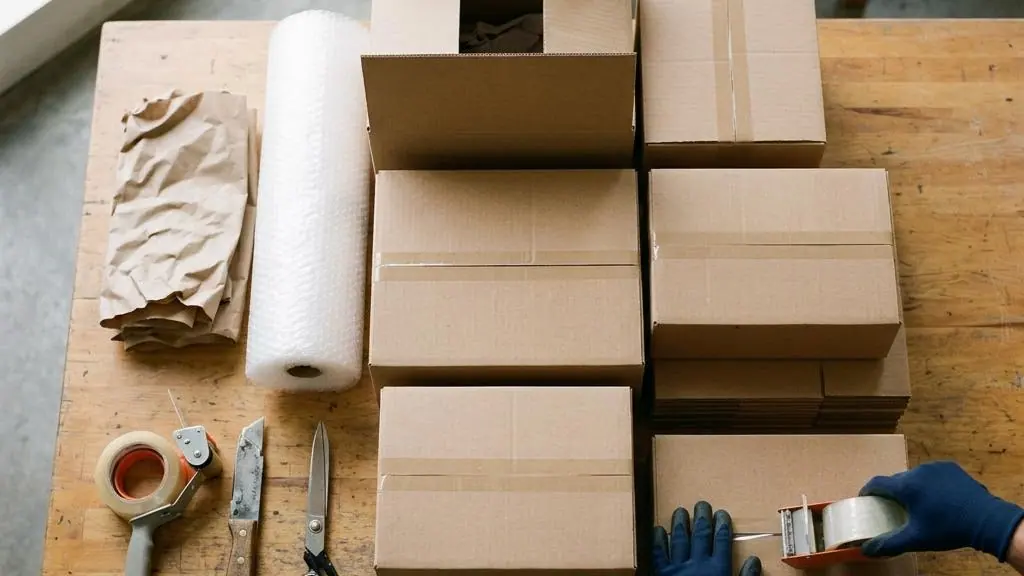
No matter where you go, there is never enough storage. If you are packing yourself for smaller items, you will need:
- Suitcases — hard-shell cases provide better protection for fragile items in transit. Label with both origin and destination addresses inside and outside
- Cardboard moving boxes — in multiple sizes. Small boxes for books and heavy items; large boxes for light, bulky items such as bedding. Never overload large boxes
- Packing paper and bubble wrap — for wrapping individual items. Newspaper works but leaves ink residue on lighter-coloured items
- Packing tape and a good tape gun — use 3–4 layers of tape on box bottoms for heavier boxes
- Permanent markers and labels — label every box on at least two sides: contents and destination room
- Mattress bags and wardrobe boxes — for items that cannot be folded or compressed
For fragile, oversized, or high-value items — artwork, antiques, large electronics, marble furniture — self-packing is not advisable. Our packing and crating team uses export-grade materials and builds custom wooden crates in our own carpentry facility specifically for items that cannot survive a standard box through sea freight.
Be sure to stack up on luggage, because lack of storage will likely be one of your prime concerns.
What to leave behind
As you can see, there is a lot to consider when drawing up the ultimate international relocation packing list. But an equally important question is what not to bring. Shipping things you do not need wastes money and creates customs complications. Consider leaving behind or selling before your move:
- Large, heavy furniture — the cost of shipping a bulky sofa or bookcase often exceeds what it would cost to buy a replacement. Saudi Arabia has well-stocked furniture stores and online marketplaces
- Appliances that are incompatible with Saudi Arabia’s 220V/60Hz power system — or that have Saudi equivalents readily available
- Any items on the Saudi prohibited list (see above)
- Perishable food — customs regulations prohibit most food imports, and what survives sea transit rarely arrives in good condition
- Items that are cheaper to rebuy than to ship — assess anything that costs under SAR 500 to replace against the cost of its shipping volume
Moving with medication is not as easy as you think
Relocating overseas is not an ideal time to be experimenting with medicine. So, to be sure, check out what medical products you can include in your international relocation packing list. First things first, if you’re dealing with any kind of medical condition, your should stack up on your prescribed medicine. Tell the doctor about your relocation plans and ask for help regarding how you should handle your condition in the coming weeks and months. Health is always a top priority, so it’s better to not just assume that you’ll have immediate access to a specific medicine in a different country.
In addition, you should buy in advance certain medicine that you usually take for minor issues. Such products include painkillers, cold medicine, and cough medicine. Also, check what medication you’re allowed in the country you’re moving to. Indeed, there are many things to watch out for when traveling with medicine, so get well-informed.
Reach out to a moving company for professional help
As you can see, there’s a lot to consider when drawing up the ultimate international relocation packing list. Sometimes, it’s not a sign of weakness to ask for guidance and assistance. What’s more, trying to do everything yourself is nearly impossible since a lot of information isn’t readily available or easy to track down. And reliable moving professionals can surely meet your halfway with their highly customizable and flexible moving services. Just ask and consider it done!
FAQs
What happens if prohibited items are found in my shipment at Saudi customs?
Prohibited items are confiscated. Depending on the item, there may be fines or, in the case of certain categories (alcohol, weapons), legal consequences. The safest approach is a thorough pre-packing review with your moving company — Four Winds reviews every client's inventory before packing begins to flag any issues in advance.
Should I pack electronics myself or use professional packers?
Small personal electronics (phones, laptops, tablets) can be carried in your personal luggage. Larger items — TVs, desktop computers, gaming equipment, home cinema systems — should be professionally packed. These items are fragile, expensive, and frequently damaged in DIY-packed sea freight shipments. Improper packing also affects your insurance claim if something is damaged.
How far in advance should I start building my packing list?
Start as soon as you know you are moving — at least eight weeks before your move date for an international relocation. Your packing list is not just a reminder of what to pack; it doubles as your customs inventory, which your moving company needs to prepare the shipping documentation. Errors in the inventory cause delays at customs.
Can I ship food to Saudi Arabia?
Saudi Arabia restricts or prohibits most food imports. Commercially sealed, non-perishable items from approved origins may be permitted in limited quantities, but anything containing pork, alcohol, or perishable products will be confiscated. As a rule, do not include food in your household goods shipment. Bring only what you need for personal use during your travel.