
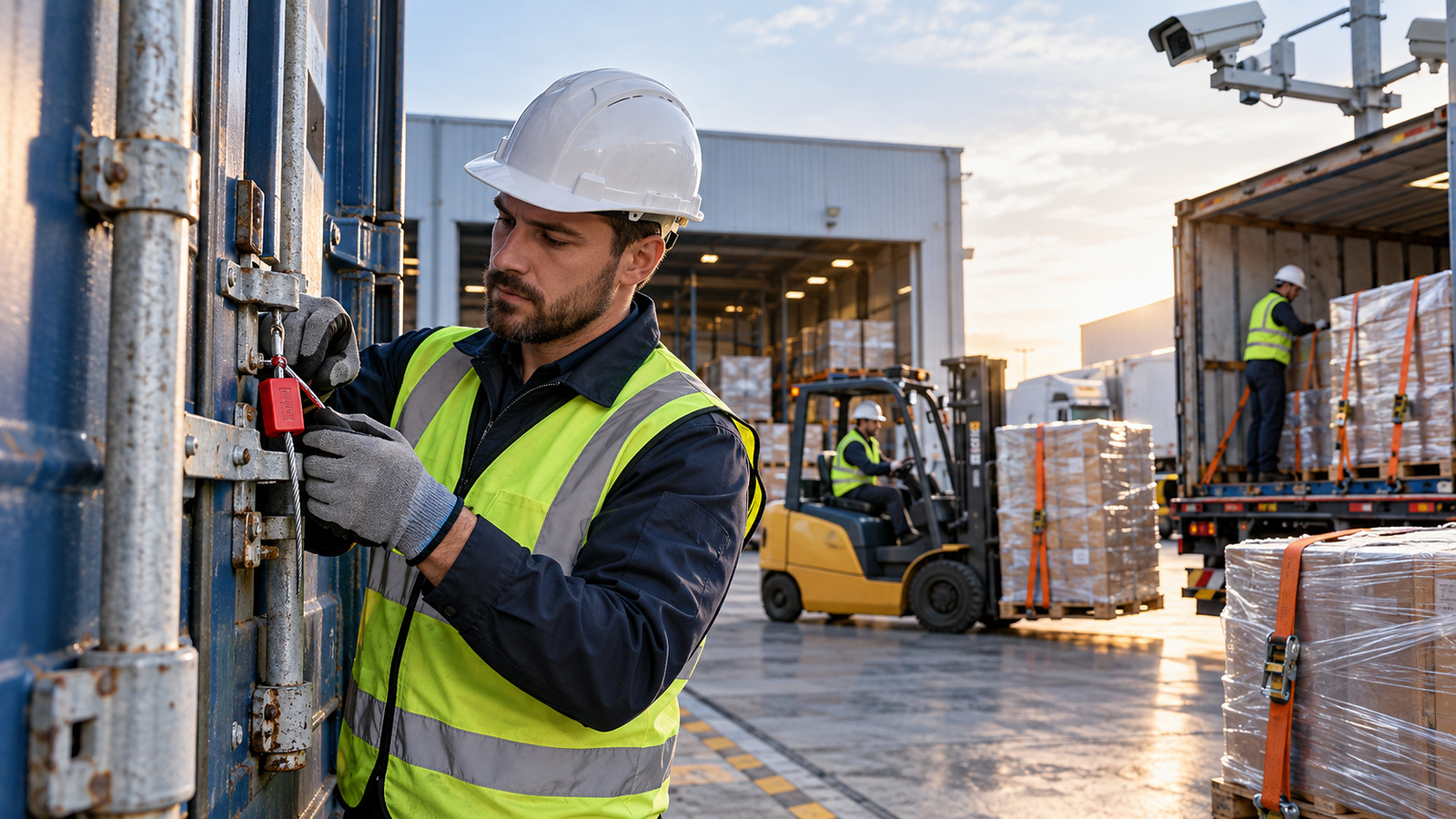
Cargo security comes down to five practical habits: proper protective equipment, correct lifting gear, securing loose items in storage, keeping shipping areas visible, and a clear chain of command. Whether you're shipping through Jeddah Islamic Port, King Abdulaziz Port in Dammam, or by air freight, these steps reduce the two most common causes of cargo loss — human error and unsecured loads — regardless of whether you're moving standard freight or high-value cargo.
Every day, there are countless upon countless of parcels, boxes, and packages traveling across the world. The technology advances, and the postal services, as well as moving and freight forwarders, are trying to keep up. Nowadays, the biggest fight is between whether your shipping will be fast or cheap. Most of the time, shipping by boat might be the cheapest way to ship internationally – while air is, obviously, faster. However, one thing that connects both of these is the need for safety. All that cargo traveling around needs to be protected, and people working with it need to be safe as well. How do you manage this? What can you do about it? In this article, discover our pick of the five best cargo security tips.
| Cargo security tip | Concrete action | Why it matters |
|---|---|---|
| Protective equipment | Safety harnesses, helmets, and safety shoes for every worker handling cargo | Reduces injury risk and prevents dropped or mishandled loads |
| Correct lifting equipment | Inspected wire ropes, slings, hooks, forklifts, and cranes, used only by trained staff | Improper lifting is a leading cause of cargo damage during loading |
| Securing the cargo | Check storage areas for loose items before and after loading | Loose cargo shifts in transit and can shift or fall, damaging goods and equipment |
| Visibility | Reschedule loading in poor weather or low light; use adequate (not blinding) lighting | Most loading accidents happen when workers can’t clearly see the load path |
| Chain of command | Assign a responsible, experienced person to each department or shift | Catches problems before they escalate into loss, theft, or damage |
What are our top 5 cargo security tips?
Let’s start with just examining our best advice for you. The important thing to note is that, even though the technology is always improving, people are the ones who handle cargo at the end of the day. So, we can aim towards perfection, but human errors can – and do – occur from time to time. What our goal needs to be is to improve the service we offer to clients, whether it is shipping fragile items or heavy furniture. So, you should train your workers on workplace safety, as well as share the knowledge you have about cargo shipping. Also, think about these:
Cargo needs to be safe!
- Protective equipment will boost cargo security by a huge margin.
- Use the right lifting equipment.
- Make sure the cargo is secure.
- Visibility is very important when talking about safety.
- Know the chain of command.
Protective equipment does save lives!
There is a reason why so many people insist on always carrying protective equipment with you. Not only will it boost cargo security, but it can be a lifesaver in some serious accidents! Make sure all your workers have safety harnesses and helmets, as well as safety shoes with them at all times. If there is any extra equipment that you have, be sure to use it too. This is especially true when you want to ship moving containers overseas – where it might take a lot of time to reach a port.
Everyone needs safety equipment.
You should also consider holding a training to get your employees familiar with the safety equipment. Otherwise, they might end up not knowing how to correctly use it. This can also be a great opportunity to optimize the use of said equipment. Finally, its maintenance is of utmost importance. Make sure everyone knows how to keep these items clean and that they also check them for damage before using them.
Use the right equipment to lift the containers
Let’s face it, lifting heavy containers is not easy. If you ever had to rent shipping containers, then you already know this. Even if you didn’t, just the mere size of them can tell you a lot about working with them. This is why it’s very important for cargo security that you have proper lifting equipment with you. Wire ropes and slings, hooks, forklifts and cranes – all of these need to be on hand and in perfect working order at all times.
Use the right equipment.
The same applies here as it did to the safety equipment. Your employees need to be able to use them. They also need to be maintained very well, and to pass an inspection before use. What’s more, there need to be rules and regulations tied to them, so that only trusted people can operate these machines. Finally, make sure everyone knows exactly how everything works – just attaching stuff randomly is not enough! This can and is very dangerous, and compromises cargo security as well!
Securing the cargo
Another thing that goes hand in hand with using the proper equipment is securing the cargo well. Even though this whole article is about cargo security, making sure that you place cargo in the right storage area is very important. So, have people check whether there are loose items in the storage – and correct this if there are.
Remember that this applies even to the cargo that’s not in the containers. Whether you are using moving services to deliver them or doing it by yourself, and you don’t get items in a container, you should have designated area where these can be stores safely too!
Make sure everything is visible
One of the key components of cargo safety is the visibility of all shipping containers. If you or your professional relocation company Saudi Arabia feel that the weather conditions are affecting the visibility, then you should probably reschedule your work for a later date. Similarly, when working in an enclosed space, you need to make sure there is enough light to see and move around. However, this light should not be too bright to blind you – it needs to be at an optimal level.
The chain of command
Finally, the last thing that will boost cargo security is the chain of command in your company. First, you need to divide people into different sectors. Here, they can learn about their line of work and how to do it correctly. What’s more, they can gather experience about it, only becoming better and better at their job the longer they work with you. Then, you need to place a responsible person in charge of each of your departments. They should be the ones with the most experience. These are the people who can notice any trouble before it even happens, and thus be able to stop it.
Cargo security risks at Saudi ports and during transit
Cargo moving through Jeddah Islamic Port or King Abdulaziz Port in Dammam passes through some of the busiest shipping lanes in the region, which makes visibility and documentation as important as physical security. International shipping and port security in general follow the International Ship and Port Facility Security (ISPS) Code, the IMO framework that requires ships and port facilities to run security assessments, appoint designated security officers, and control access to cargo areas. Freight forwarders operating in Saudi Arabia work within this same framework, on top of local customs security checks.
What to do if cargo is damaged or stolen
Even with strong security measures in place, damage and loss can still happen — which is why documentation matters as much as prevention. Photograph the cargo and packaging immediately, keep the bill of lading and packing list on hand, and file a claim with your freight forwarder or insurer within the timeframe stated in your shipping contract, since most carriers set strict deadlines for claims.
For the full claims process, you need to research how to handle cargo claims.
Preventing theft during packing and handling
A large share of cargo security issues start well before the shipment reaches a port — during packing and initial handling. Using tamper-evident seals, avoiding branded packaging that signals valuable contents, and limiting the number of people with access to a shipment’s location and schedule all reduce opportunistic theft. Our anti-theft packing techniques guide covers specific packing methods that make tampering visible and discourage theft before cargo ever leaves the warehouse.
Make sure your cargo is safe!
Strong cargo security comes down to trained people, the right equipment, and clear procedures — from the warehouse floor to the port. Four Winds Saudi Arabia applies these same standards across our cargo transportation services in Jeddah, Riyadh, and Dammam. Contact our logistics team for a free freight quote today.
FAQs
What is the most common cause of cargo damage during shipping?
Human error during loading and lifting is the most common cause, typically from improperly secured cargo or lifting equipment used incorrectly. Training workers on lifting equipment and load-securing procedures addresses most of these incidents before they happen.
What should I do if my cargo arrives damaged?
Photograph the damage and packaging before unpacking, keep your bill of lading and packing list, and file a claim with your freight forwarder or insurer immediately — most shipping contracts set a strict window for filing claims. See our cargo claims guide for the full process.
Is high-value cargo shipped differently for security reasons?
Yes. High-value cargo typically travels with discreet, unbranded packaging, tighter access controls, real-time tracking, and sometimes dedicated escorts or specialized insurance — see our guide on what qualifies as high-value cargo for the full criteria.
What international standard governs port and cargo security?
The ISPS Code, adopted by the International Maritime Organization, sets mandatory security requirements for ships and port facilities handling international cargo, including Saudi Arabia's major ports.
Do I need cargo insurance if my freight forwarder already has security measures in place?
Yes. Security measures reduce risk but don't eliminate it, and most freight forwarder liability is limited by international shipping conventions. Dedicated cargo insurance covers the gap — see our guide to cargo insurance types to find the right policy.