
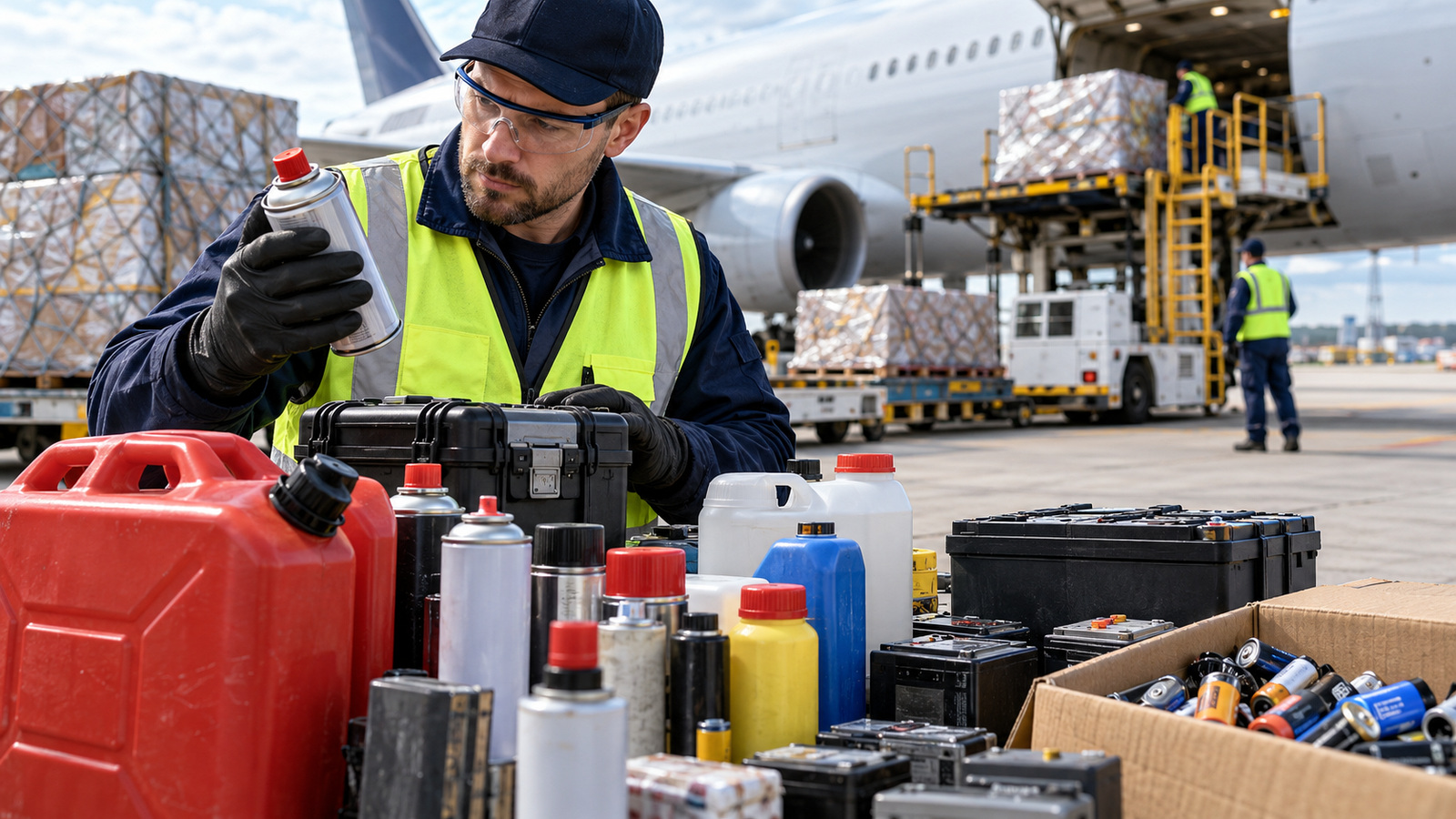
Saudi Arabia's General Authority of Civil Aviation (GACA) and Jeddah's King Abdulaziz International Airport enforce a list of 30 prohibited items, split between 16 items banned from cabin baggage and 14 banned from all baggage, including checked bags. Beyond the standard liquids and lighter rules that apply worldwide, Saudi Arabia adds its own restrictions on drones, radio-controlled devices, and certain chemicals for anyone flying in, out of, or within the Kingdom.
Sometimes, when moving house, you will not need to go to your new destination by car. Maybe this is because you don’t have a car, or you’re are moving across the ocean – so driving there is not an option. In these cases, flying to your new home might be the best option. However, if you have ever flown on a plane before, you know that there will be many restrictions there to meet you. Simply, you cannot just stuff anything you want into your bag and carry it into a new country. There are rules and guidelines you need to follow – both to prevent package theft as well as to ensure the safety of everyone on board. Some of those items might even contain hazardous materials that you don’t know about. In this article, we discuss what you cannot take in your carry on bag.
| Item category | Cabin baggage | Checked baggage |
|---|---|---|
| Knives, blades, meat cleavers | Prohibited | Allowed if properly packed |
| Compressed gases, explosives, crackers | Prohibited | Prohibited |
| Firearms and imitation weapons | Prohibited | Allowed with declaration and hard-sided, locked case |
| Liquids over 100ml | Prohibited (unless in 100ml containers in one clear bag) | Allowed |
| Lighters and matches | One lighter allowed, no spare fuel | Prohibited |
| Drones (250g–25kg) | Not allowed without GACA authorization | Not allowed without GACA authorization |
| Radioactive, corrosive, or oxidizing materials | Prohibited | Prohibited |
What Are Saudi Arabia’s Airport Rules for Dangerous Goods?
King Abdulaziz International Airport in Jeddah enforces a list of 30 prohibited items on top of the standard international rules. 16 of these are banned specifically from flight cabins: knives, blades, compressed gases, toxic liquids, baseball bats, skateboards, explosives, and crackers among them. A further 14 items are banned from all baggage, checked or carry-on, including oxidants, organic peroxides, radioactive materials, electric shock devices, liquid oxygen devices, and flammable liquids.
If airport security finds any of these 30 items, the item is confiscated on the spot and you have no right to reclaim it — the airport authority has stated this explicitly. Airlines and airport staff are the final word on borderline cases, so if you’re unsure whether an item qualifies, contact your airline before you travel rather than risk it at the gate.
Why does GACA add rules on top of the international standard?
Saudi Arabia enforces additional screening during Hajj season, when King Abdulaziz Airport handles a sharp spike in departing and arriving pilgrims. The 30-item list was specifically communicated to Hajj pilgrims to reduce confiscations and delays during peak travel weeks, so the rules are strictest around that period even though they technically apply year-round.
Are liquids hazardous materials?
Get travel size products for your flight.
One of the most famous items you cannot take with you on a plane are liquid bottles with more than 100ml of the liquid. This often confuses people and makes them wonder why there is such a restriction. However, the liquids rule has become a pretty general thing for most of the airlines (although some might differ from the others) and it’s there for the passengers’ safety.
The rule of the thumb here says that you don’t get a container bigger than 3.4 ounces (100ml). You also need to get a clear, one-quart zip log bag to put these in. Otherwise, you will have to empty them or toss them away. Luckily, a lot of companies nowadays will offer travel-size shampoos, shower gels, toothpaste, and similar items.
When it comes to medication, however, there are special rules you need to follow. These, unfortunately, vary from country to country. You will need to check with local authorities. Usually, you will need to let the security people know that you have liquid medicine traveling with you. Keep in mind that some might even ask for a doctor’s prescription or proof of some kind. However, this, again, varies – so make sure you check before your trip and prepare anything necessary.
Don’t bring flammable items on the plane
Empty your lighter before packing it.
A thing that might be pretty obvious, yet we still need to talk about, are the flammable items. These are considered hazardous materials, and you should avoid bringing them on the plane. However, since a lot of professional relocation companies in Saudi Arabia will also refuse to transport them, it might be the best for you to either use everything up before the move or just toss it out so you don’t get in any trouble.
So, what are these items? Well, those are the ones with little fire sign on their back. Things like fireworks are an obvious guess, but bleach and paint thinners also fall into this category. If you are going camping, you should take note of this, because a lot of camping gear has some flammable substances as well!
When it comes to smoking, there are certain rules. Again, these may vary from a company to company, so you should check them before flying. However, usually, companies will let you get one lighter on a plane in your carry-on bag. If you insist on taking one, your best bet would be to empty it of fuel first – this is one of those hazardous materials. When it comes to e-cigarettes or vapes, TSA says that you need to put them in your carry-on – these cannot go in your checked luggage. However, the liquid you use for these needs to be within the liquid requirements.
How fruits are hazardous materials
Here’s another thing that confuses a lot of people, but it might be a smart idea to leave fruits, veggies, and meats out of your luggage. These aren’t exactly hazardous materials, but there are many laws regarding them. Just within the United States, for example, there are laws prohibiting you from bringing these items across state borders!
Snack while flying.
This is because there are countries (and states) that rely heavily on agriculture. You bringing a crop with you can carry potential risks because that item can have bacteria or organisms that can easily destroy a huge amount of their plant population. So, in order not to have these confiscated when entering a country, make sure you eat them while in the air.
There are some countries (Australia and New Zealand, for example), who will not even let you bring wooden souvenirs within the borders because there are also hazardous materials for them. Better safe than sorry, so read up on these before the move!
Guns and similar items
Finally, we need to take a quick glance at guns and similar items. This is because there are people who want to move or travel with their gun, and are not sure about the airline regulations. The rules are simple – you cannot bring a weapon in your carry-on bag, so you can’t pack guns there. However, you can pack an empty gun in your checked bag. The rule, though, is that the bag needs to have hard sides and a lock.
Just like with other hazardous materials, you should check with your airline about these regulations as well. There might be some restrictions or variations to this rule, and some airlines might charge extra fees for carrying guns on the plane. Other items might be completely forbidden, like gun powder, for example. Of course, it goes without mentioning that you need to research the gun laws in the state or country you are visiting or moving to. It’s a smart idea to talk to your Saudi Arabia relocation service provider about these, just to be sure.
Can You Ship or Import Dangerous Goods When Moving to Saudi Arabia?
The carry-on rules above cover what you personally fly with — but moving a household or business shipment into the Kingdom is a separate process governed by ZATCA (the Zakat, Tax and Customs Authority). ZATCA maintains its own prohibited-goods list for imports, covering intoxicants and drugs of any kind, counterfeit currency, fireworks, tear gas, and weapons or ammunition without a permit. Declaring an item incorrectly at customs carries real financial risk: first-time violations are fined at 25% of the item’s value, and repeat violations at 50%, with suspected commercial smuggling or narcotics referred to the Public Prosecution.
For freight and air cargo specifically, dangerous goods (batteries, aerosols, chemicals, and similar items) must be packed, labeled, and documented according to the IATA Dangerous Goods Regulations, which apply on top of Saudi Arabia’s own rules. A logistics services in Saudi Arabia provider that handles dangerous goods documentation daily can flag anything in your shipment that needs special packaging or a separate declaration before it ever reaches the airport or port.
What About Drones and Electronics When Moving to Saudi Arabia?
Drones are a common surprise for people relocating to Saudi Arabia. Any drone weighing between 250 grams and 25 kilograms must be registered with GACA, and its serial number cleared before it can pass through customs — an unregistered drone is confiscated at the airport. As of the current rules, only Saudi residents with a national ID can complete this registration, which means visitors and new arrivals typically cannot bring a personal drone into the country until their residency is finalized. Radio-controlled devices and model airplanes need separate GACA approval, though standard Wi-Fi routers and Bluetooth devices are unaffected.
If a drone or radio-controlled item is part of your shipment, flag it to your professional relocation companies in Saudi Arabia before packing day — it’s easier to arrange GACA paperwork in advance than to have the item held at the airport.
Consult the professionals
Knowing what’s restricted before you pack saves you a confiscation at the gate and, for a full household shipment, a customs fine down the line. Four Winds Saudi Arabia handles both personal relocation and freight documentation across Jeddah, Dammam, and Riyadh, including flagging dangerous goods before they reach the airport. Get a free moving estimate and our team will walk through anything in your shipment that needs special handling.
FAQs
What happens if I bring a prohibited item to a Saudi airport?
Security confiscates the item on the spot, and you have no right to reclaim it. This applies to all 30 items on Jeddah's King Abdulaziz Airport list, whether found in cabin or checked baggage.
Can I bring a drone into Saudi Arabia?
Only if it's registered with GACA in advance. Drones weighing 250 grams to 25 kilograms must be registered and cleared through customs, and currently only Saudi residents with a national ID can complete that registration.
Are the Saudi airport rules different from TSA rules in the US?
Yes. Saudi Arabia's GACA and King Abdulaziz Airport add a 30-item list on top of the standard international rules, including extra restrictions on drones, radio-controlled devices, and certain chemicals not specifically named in TSA guidance.
What's the fine for declaring a prohibited item incorrectly at Saudi customs?
First-time violations are fined 25% of the item's value, and repeat violations 50%. Suspected smuggling or narcotics cases are referred to the Public Prosecution.
Do dangerous goods rules apply to my household shipment, not just my carry-on?
Yes. Items like batteries, aerosols, and chemicals in a household or freight shipment must be packed and labeled under the IATA Dangerous Goods Regulations, separate from the personal carry-on rules covered above.