
A practical guide to moving to Jeddah, covering what to expect from the city, local culture, working and schooling, getting around, plus visas, cost of living, and healthcare for expats.
Saudi Arabia is mysterious and unique in many ways. It’s a beautiful country with an amazing culture. Because whatever city you choose to live you will not make a mistake. And if your decision is moving to Jeddah then it is going to be both challenging and adventurous at the same time. Getting used to a new culture, language, and country can also be the way to test one’s patience. Saudi Arabia is no exception. Let Four Winds Saudi Arabia share some useful information for anyone who is preparing to visit or move here either alone or with family.
Welcome to Saudi Arabia!
Jeddah
Jeddah is one of Saudi Arabia’s largest industrial cities. It is a commercial port with a booming logistics industry and the seat of several major Islamic banks and the Arab media. The city is also a home for Saudi art. An impressive collection of galleries and open-air installations afford it an atmosphere lacking in many other Middle Eastern destinations. The principal gateway to Mecca, Jeddah welcomes thousands of Muslims from all over the world every year. Many enthusiasts stay long after their Hajj to join the countless foreigners who’ve moved here for employment opportunities.
Moving to Jeddah
When you are moving to Jeddah you need to know some basic about this city. For example, you check online for every information you want to know. You can read about Jeddah’s amazing history, culture, art scene places to go out or whatever. But most importantly you need to know the language. In the beginning, it will be enough to know a few words, like numbers, and to name something. That’s important because their language is difficult to pronounce, but with a little practice, everything will be just fine.
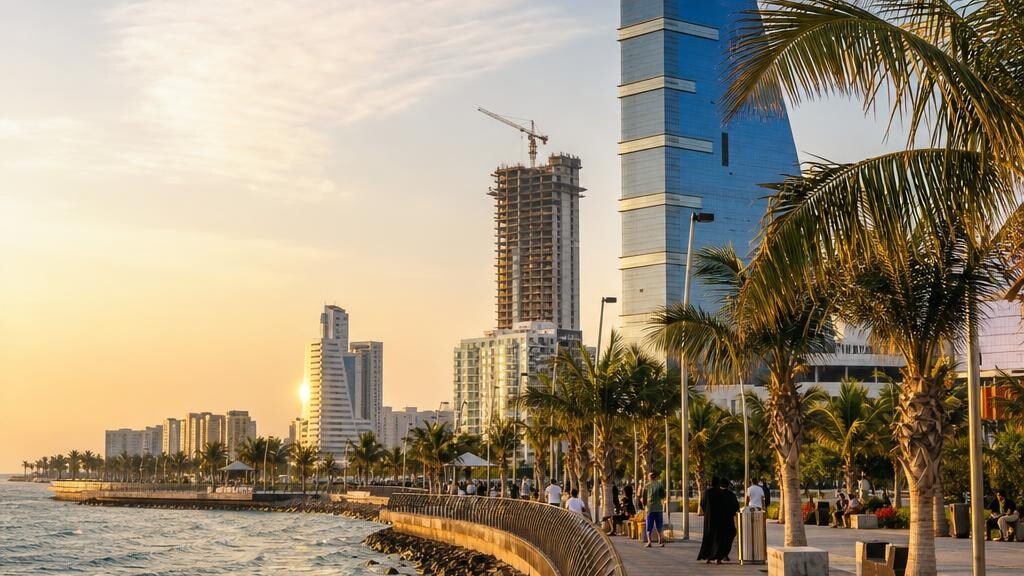
If you are a fan of beautiful sunset then moving to Jeddah is a good decision.
Moving to Jeddah is going to be a very exciting experience for you. The city is beautiful, especially at night. During the day Jeddah looks like all desert cities: a dull cream/sand color everywhere, with very little green surfaces. But at night, the city becomes alive and funky. Many buildings are decorated with colored neon lights, which suddenly makes it look more vibrant and exciting. Also when you are moving to Jeddah you need to know how to adjust to a new climate. Because Jeddah retains its warm temperature even when it comes to winter. Summer temperatures are extremely hot, often breaking the 43 °C.
Pay attention when moving to Jeddah
In Jeddah, “yes” does not always mean YES! When shopping you need to be very careful. Because whatever you ask about something you want to buy in the store they will usually say yes. It is their custom not to say no, it is impolite. So even if they don’t know the answer they will often say yes, they will not say they don’t know. The same goes for directions. If you ask where is a particular shop they will point in any given direction and tell you it is down that way. You will soon find out that it isn’t.
Queueing customs can also differ from what some Western newcomers expect. You may be waiting patiently in a line to be served and notice others move ahead. This is simply a difference in local habits rather than rudeness, so a little patience goes a long way.
Working in Jeddah
When you are moving to Jeddah because of the job you should know that your payment is going to be lower than what you expected. So if you were offered 10,000 SR/month, you could ask for 15,000 and then you both could end up agreeing on 12,000. In addition to your pay, some jobs give you a housing and transportation allowance. Others include those items within your pay or “base salary.” Be sure to find out what your payment will include.
An education system in Jeddah
When you are moving to Jeddah because of education then you should prepare. You see, public schools teach only in Arabic and offer English in later grades. Therefore, plenty of International schools are available to expats. Many Saudi’s send their children to these schools as well. All International schools in Jeddah are tuition and “for-profit.” Yes, even the American International School and the British International School. Those are the most well-known schools around.
Some schools offer an American or British curriculum. This simply means that the textbooks are from either country. Expat teachers from around the globe work at these schools. However, just because the school has American and/or British curriculum does not mean that all the teachers are from that respective country. In fact, most are not. At smaller International schools, some teachers are native English speakers and some speak English as their second language.
Check out a few options when you are picking the right school!
Also, when you are moving to Jeddah with your family you have to prepare your kids for school. Because some of the school campuses have all the building close by and some are spread out across town. However, pre-schools and Kindergarten schools are also throughout the city. Some schools are split by gender, having a boys side and a girls side. If you have children, the advice is to visit every school that you can. Also, you should know that the school websites do not offer enough information. The Facebook groups offer some, but not enough information to make the best decision you can, for your children.
Transportation in Jeddah
And last but not least – the transportation! When you are moving to Jeddah you need to explore the city. And the best way to do that is to take a taxi. Most of the taxi drivers are Pakistani, Indian, Yemen and Egyptian. So before you get into taxi make sure they understand where you want to go. You can get advice from local expats on prices; taxis have meters but drivers often don’t use them, so agree on a fare first. These days, most residents rely on ride-hailing apps such as Uber and Careem, which show the price up front and remove the language barrier entirely — this is now the easiest and most transparent way to get around the city.
Many of the drivers go by landmarks, such as Malls, not street names. The best advice for you would be to print out a map with directions. But even the map is not that reliable because the names of many roads and street names are changing. You also cannot go by street numbers because most houses and shops do not have them. Transportation can be complicated, as the drivers usually don’t speak English.
Visas and residency (Iqama) basics
Before you move to Jeddah, one of the most important things to sort out is your legal status. Most expats arrive on a work visa arranged through their employer (the sponsor), which is then converted into a residency permit known as the Iqama. Your Iqama is essential for daily life — from opening a bank account and renting a home to registering for utilities and enrolling children in school. Keep your passport, employment contract, and educational certificates (often needing attestation) organised before you arrive, and confirm with your employer exactly which documents they will handle and which are your responsibility.
Cost of living and housing
Jeddah offers a range of housing options, from serviced apartments and standalone villas to gated compounds that are popular with expat families for their amenities and community feel. Rents vary widely by neighbourhood and by whether you choose compound living or a standard apartment. When budgeting, remember to account for annual (rather than monthly) rent payments, a security deposit, utilities, transport, and schooling if you have children. Planning your budget early makes the transition far less stressful.
Healthcare and insurance
Health insurance is mandatory for expats in Saudi Arabia and is typically provided by your employer as part of your package. It’s worth checking the level of cover offered, whether it extends to your family, and which hospitals and clinics are included in the network. Jeddah has a good selection of private hospitals with English-speaking staff, so confirm the details of your policy before you need to use it.
Frequently asked questions about moving to Jeddah
Is Jeddah a good city for expats?
Yes. As a major commercial and logistics hub with a large international community, Jeddah is one of the more relaxed and cosmopolitan cities in Saudi Arabia, making it a popular choice for newcomers.
Do I need to speak Arabic to live in Jeddah?
English is widely used in business and international schools, so you can manage day to day without fluent Arabic. That said, learning a few basic words and numbers will make everyday life much smoother and is warmly appreciated by locals.
What’s the best way to get around Jeddah?
Ride-hailing apps like Uber and Careem are the most convenient and transparent option for most newcomers, with taxis also widely available.
For more on settling in, see our guides on how to cope with the biggest expat problems and the 5 common challenges for expats in Saudi Arabia.
FAQs
Is Jeddah a good city for expats?
Yes. As a major commercial and logistics hub with a large international community, Jeddah is one of the more relaxed and cosmopolitan cities in Saudi Arabia, making it a popular choice for newcomers.
Do I need to speak Arabic to live in Jeddah?
English is widely used in business and international schools, so you can manage day to day without fluent Arabic. That said, learning a few basic words and numbers will make everyday life much smoother and is warmly appreciated by locals.
What's the best way to get around Jeddah?
Ride-hailing apps like Uber and Careem are the most convenient and transparent option for most newcomers, with taxis also widely available.