
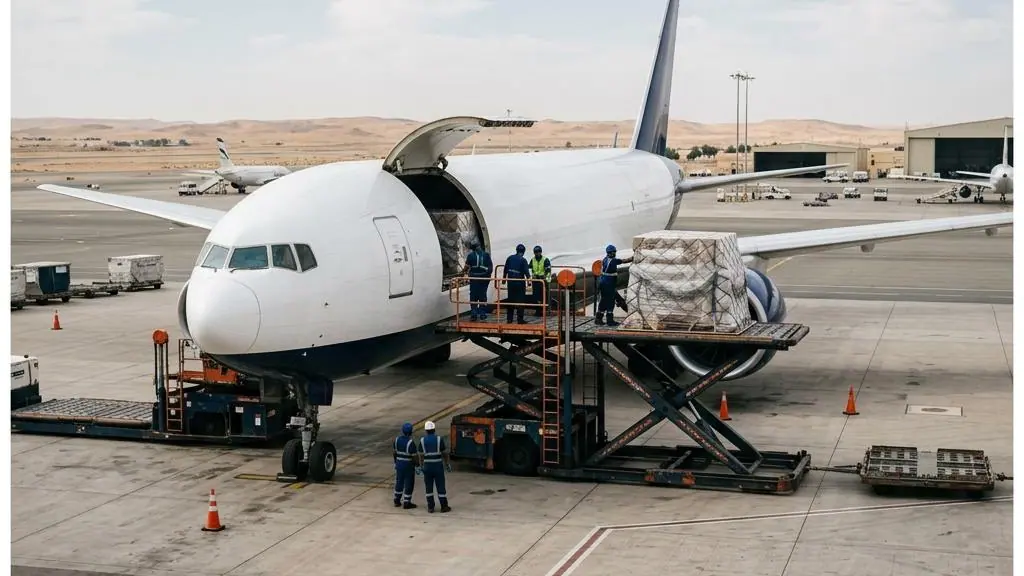
Air freight makes sense when the value of a shorter transport stage justifies its cost and the cargo can be accepted on the proposed route. The decision should be based on your shipment, not a general claim that air transport is always cheaper, safer or more reliable.
For a business shipping to or from Saudi Arabia, a useful comparison starts with urgency, packed dimensions, weight, product restrictions and the full collection-to-delivery plan.
Define the deadline before choosing the mode
Explain when the goods must be available to the receiver and why that date matters. A production spare part, a customer order and an exhibition item can have different priorities even when their weights are similar.
Separate the requested delivery date from the proposed flight schedule. Collection, export preparation, terminal handling, customs processes and final delivery also take time. Ask which stages are included in the estimate and which remain subject to confirmation.
Measure the cargo after packing
Air-freight pricing can depend on actual weight or volumetric weight. IATA's air cargo tariffs and rules guide explains why lightweight but bulky goods can attract a different chargeable weight from their scale weight.
Send the number of packages, the packed length, width and height of each package, and the gross weight. State whether packages can be stacked, whether a pallet is included and whether the cargo can be repacked. Ask the forwarder to explain the chargeable-weight basis used in the quotation.
Do not compare an estimate based on unpacked product dimensions with another quotation based on the final packed shipment.
Compare total costs, not just an airport-to-airport rate
Ask whether the quotation includes collection, screening, terminal charges, customs assistance and delivery. Check what is excluded, which currency applies and how long the quotation remains valid.
Air freight may support an urgent commercial need even where its transport charge is higher than another option. Conversely, a less urgent shipment may suit a different mode. Compare the practical effect on your business rather than assuming a universal cost advantage.
You can ask about air freight services and compare the proposed scope with sea freight where both are suitable.
Disclose batteries, liquids and other special characteristics
Describe the contents accurately before booking. Batteries, aerosols, certain chemicals and dry ice can require additional assessment. “Small package” does not mean “unrestricted cargo.”
IATA's Dangerous Goods Regulations resource is a reference for the current regulatory framework. Acceptance depends on the goods, preparation, airline and route. Do not conceal a regulated component or assume that ordinary packaging is sufficient.
For temperature-sensitive products, provide the required conditions and handling information for review; do not assume that a specific temperature range is available on every service.
Prepare a useful enquiry
Include the collection and delivery locations, cargo description, packed measurements, gross weight, readiness date and required delivery date. Attach relevant product information and explain any handling limitations.
The freight booking information guide can help you organise those details before contacting Four Winds Saudi Arabia.
Common questions
Is air freight always the best choice for valuable goods?
Not automatically. Consider handling requirements, acceptance conditions, timing, insurance arrangements and the complete route.
Does an estimated flight date guarantee delivery?
No. Ask which milestones are confirmed, which are estimates and how changes will be communicated before accepting the arrangement.