
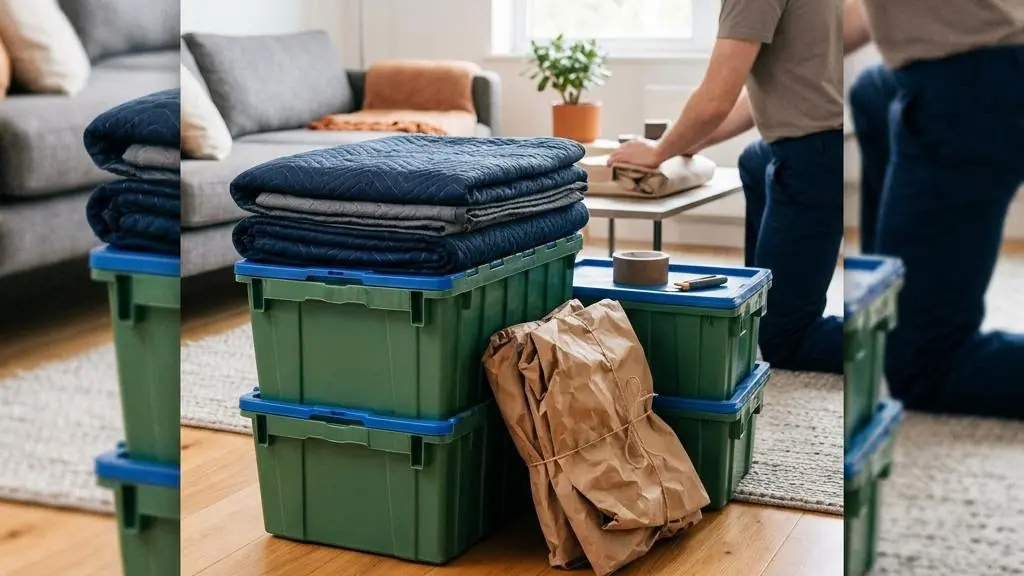
Sustainable packing begins with a practical question: how can you protect the goods with an appropriate amount of material and avoid waste that serves no useful purpose? The answer depends on the cargo, the handling stages and what can actually be reused or recycled at the destination.
This guide replaces the earlier list of 2021 packing trends. It is a decision-making checklist, not a claim that one material is the greenest choice for every move or shipment.
Protect the goods before reducing the packaging
Damage can mean replacement goods, additional packing and another transport movement. Reducing material is not helpful if it leaves the contents unsupported or exposed.
Review the item's weight, fragility, shape and sensitivity to moisture or movement. Choose a packing method suitable for the complete journey rather than judging it only by appearance.
If you need packing and crating assistance, describe the actual goods and handling requirements. Confirm the available service scope before making assumptions about materials or special equipment.
Reuse only what is still fit for purpose
A previously used box may be suitable for some contents if it is clean, dry and structurally sound. A damaged carton, weakened pallet or unsuitable container should not be reused simply to avoid buying a replacement.
Remove obsolete labels where appropriate and make the current handling and delivery information clear. Check whether the packaging can support the load and the expected handling stages.
Reusable containers can be worth evaluating where there is a workable return arrangement. Do not assume that Four Winds Saudi Arabia offers a box-rental scheme or that a container will be reused after a one-way international move.
Ask specific questions about material claims
“Recyclable,” “recycled” and “biodegradable” describe different things. Ask the supplier what the claim means for that product and which disposal conditions are needed.
A material may be accepted by one local collection scheme and rejected by another. Check the actual destination facilities before planning disposal. Keep materials separated where that makes collection or reuse more practical.
Avoid presenting a packaging choice as carbon-neutral or environmentally superior without a clear basis for that comparison.
Use space carefully without overloading
Appropriate box sizes and a considered loading plan can avoid unnecessary empty space. That does not mean compressing fragile items, exceeding a package's limits or removing essential cushioning.
For palletised freight, confirm the packed dimensions, weight and handling characteristics. The palletised cargo preparation guide explains the information useful for a freight enquiry.
Plan what happens after unpacking
- Set aside usable boxes and protective materials for a realistic next use.
- Keep contaminated or damaged packaging out of reuse piles.
- Check local acceptance rules for each material.
- Ask the receiving site how it wants pallets and crates handled.
- Record what worked so the next shipment can be prepared more effectively.
For an international movement, discuss whether any packaging requirements apply to the goods or route. Do not assume that a sustainable-material label replaces applicable transport or import requirements.
Common questions
Is using less packaging always more sustainable?
Not if the goods are damaged or the packaging becomes unsuitable for handling. Protection and waste reduction need to be considered together.
Can every packing material be recycled after delivery?
No. Acceptance depends on the material, its condition and the local scheme. Confirm the destination options rather than relying on a generic label.